
Picture this: you’ve opened a brand-new coffee shop in your city. The interiors are cozy, your cappuccinos are rich, and your pastries melt in the mouth. Yet, weeks go by and customers trickle in slowly. Why? Because people searching “best coffee near me” on Google don’t find you.
Now shift that story online. Your business website may look stunning, but if it doesn’t appear on search engines when people look for your product or service, it’s almost invisible. This is where Search Engine Optimization (SEO) becomes your strongest ally. SEO is the digital map that guides customers directly to your brand, making sure you don’t just exist , you thrive.
Understanding SEO: The Digital Lifeline
At its core, SEO (Search Engine Optimization) is the process of improving a website so it ranks higher on search engines like Google. The better your ranking, the more likely users will visit your site. Unlike ads, which stop working when you stop paying, SEO builds long-term visibility and credibility.
The Building Blocks of SEO
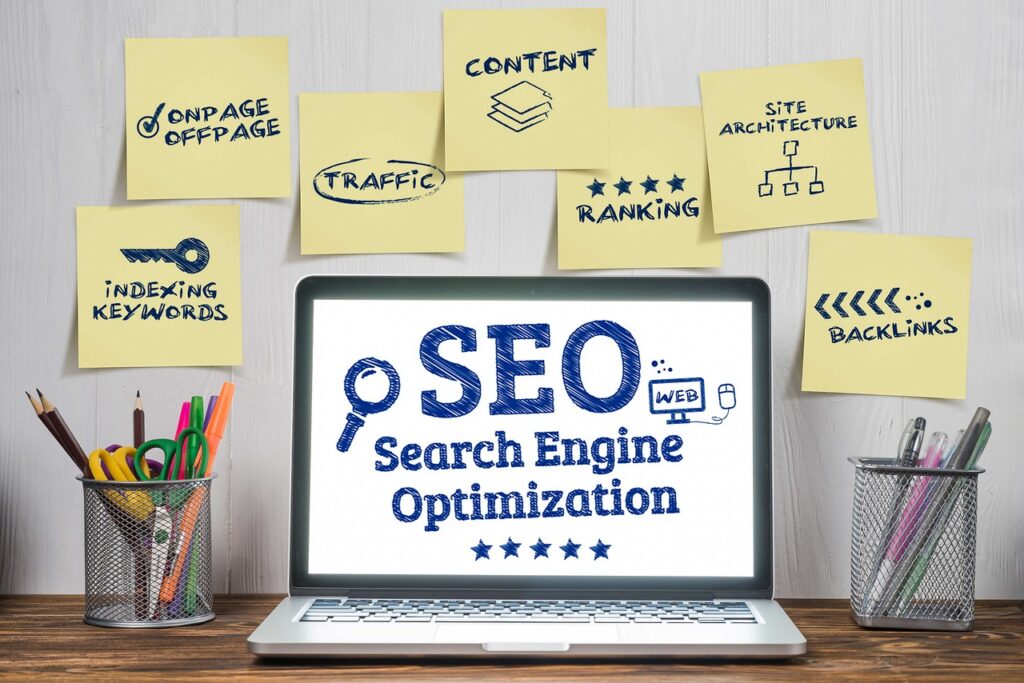
SEO is not one-dimensional. It includes multiple strategies that work together:
- On-Page SEO – Optimizing titles, content, and images.
- Off-Page SEO – Building backlinks and brand authority.
- Technical SEO – Ensuring mobile-friendliness and site speed.
- Local SEO – Targeting customers in a specific location. Example: A bakery using “birthday cakes near me” to attract local customers.
Why SEO Powers Digital Marketing
SEO is the engine behind most digital marketing campaigns because:
- It brings organic, cost-effective traffic.
- It builds brand trust (users prefer organic results).
- It offers long-term ROI, unlike paid ads.
In fact, according to a leading journal, organic search drives 53% of all website traffic.
How Search Engines Work with SEO
To understand SEO, think about how Google operates:
- Crawling – Bots scan web pages.
- Indexing – Relevant pages are stored in a giant library.
- Ranking – Algorithms decide which pages best answer a query.
If your website doesn’t meet Google’s standards, it won’t rank no matter how great your content is.
Optimizing Your Website for SEO
Your website is the starting point for SEO success. Key steps include:
- Use clean, keyword-rich URLs (e.g.,
/seo-tips). - Write compelling meta descriptions.
- Add alt-text for images.
- Improve site loading speed.
- Ensure mobile responsiveness.
The Power of Google Traffic
Google controls over 90% of global search traffic. Ranking on its first page is vital because 75% of users never go past it. Imagine two online stores: one ranks on page one, another on page three. The first store gets thousands of visits; the second barely survives.
Essential SEO Tools
To measure, improve, and track SEO, you need tools:
- Google Analytics – Tracks visitors and behavior.
- Google Search Console – Monitors keyword performance.
- SEMrush & Ahrefs – Keyword and backlink analysis.
- Yoast SEO – Great for WordPress sites.
Organic Trends in Search Engines
SEO is evolving, and so are search habits:
- Voice Search – “Hey Google, where’s the nearest gym?”
- Featured Snippets – Direct answers shown at the top.
- Mobile-First Indexing – Google prioritizes mobile-friendly sites.
Businesses adapting to these trends gain a competitive edge.
A Beginner’s Guide to SEO
If you’re new to SEO, here’s where to begin:
- Research keywords relevant to your niche.
- Create high-quality, informative content.
- Build backlinks from trusted sources.
- Track performance using free tools.
SEO vs SEM: What’s the Difference?
- SEO = Organic, free, long-term.
- SEM (Search Engine Marketing) = Paid ads for instant visibility.
Smart businesses use both: SEM for quick results, SEO for sustainability.
Generative Engine Optimization (GEO) vs SEO
With AI-powered search engines emerging, Generative Engine Optimization (GEO) is about making content visible in AI-generated answers.
- SEO optimizes for traditional search rankings.
- GEO prepares content for AI-driven, conversational search.
AI and SEO: Friends or Foes?
AI tools like ChatGPT, Jasper, and SurferSEO help businesses write content, suggest keywords, and analyze competition. But AI complements SEO rather than replacing it. Human creativity, brand expertise, and strategy still define success.
SEO has become the backbone of online success in 2025. From boosting visibility and driving traffic to adapting for GEO and AI trends, it’s clear that businesses ignoring SEO risk fading into obscurity. By investing in SEO, you’re not just optimizing a website — you’re ensuring your brand stays visible in a competitive digital landscape.
Start your optimization journey today! Get more SEO traffic!
Contact US
FAQs – Quick Answers
What does SEO mean?
Search Engine Optimization, improving website rankings on search engines.
What are the 4 types of SEO?
On-Page, Off-Page, Technical, and Local SEO.
What is an example of SEO?
Optimizing a restaurant’s site to rank for “best pizza near me.”
What are the basics of SEO?
Keyword research, content optimization, backlinks, and site performance.
Which tool is best for SEO?
Google Analytics, SEMrush, and Ahrefs are most popular.
Is SEO difficult to learn?
No, with practice and patience, beginners can learn it.
How to start SEO for beginners?
Start with keyword research and create optimized content.
Is SEO free or paid?
SEO itself is free, but tools and expertise may cost.
Which AI is better for SEO?
AI tools like ChatGPT, Jasper, and SurferSEO are widely used.
Can I learn SEO by myself?
Yes, through guides, online tutorials, and practice.
What is the first step for SEO?
Keyword research.
Is SEO a good career?
Yes, SEO is in high demand and offers great career growth.